

Blog
The Importance of Fast Delivery for Research Materials

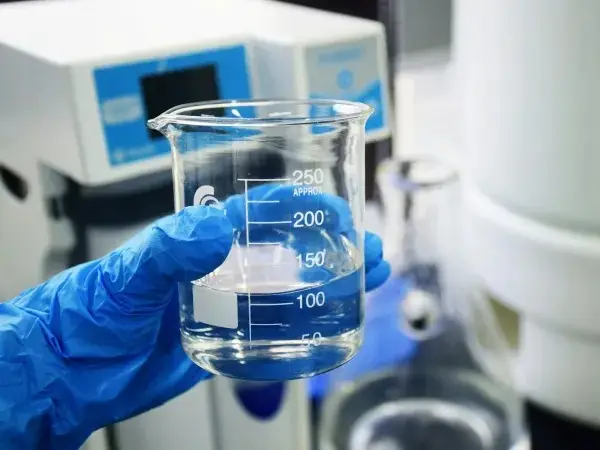
Timing is not a convenience issue in laboratory work. A research compound that spends five days moving through a national distribution network has a different history from one that crossed a metropolitan area in an afternoon, and that difference shows up in scheduling, in handling risk, and occasionally in the material itself. This is what fast delivery for research materials actually changes, and how to plan around it.
Why does fast delivery for research materials matter?
Three reasons, in roughly this order of importance.
The first is schedule integrity. Laboratory work is sequenced. If a compound is meant to arrive on Tuesday and lands the following Monday, everything downstream of it moves too — bench time, equipment bookings, and any collaborator waiting on a result.
The second is time out of controlled storage. A lyophilized peptide is stable in a sealed vial, but stability is not indifference. Every day in transit is a day the material sits somewhere you cannot see, at a temperature nobody is recording.
The third is failure recovery. When a local delivery goes wrong you find out the same afternoon and can resolve it before the day ends. When a multi-day shipment goes wrong you often find out on day four, and the replacement takes another four.
What actually happens to a peptide in transit?
Freeze-drying removes the water that would otherwise drive degradation, which is why lyophilized peptides tolerate shipping at all. The risks in transit are cumulative rather than dramatic: repeated temperature cycling as a package moves between vehicles, sorting facilities and doorsteps; humidity exposure if a seal is compromised; and physical handling that a sealed vial is not designed to absorb indefinitely.
The peer-reviewed literature on peptide lyophilization and stability covers the underlying chemistry in detail. None of this makes shipped material unusable. It does mean that transit time is a variable worth minimising rather than ignoring, in the same way you would minimise any other uncontrolled variable in an experiment.
How much time does fast delivery for research materials actually save?
Against standard ground shipping from an out-of-state supplier, typically two to five business days. Against expedited air, typically one to two. For a Bay Area laboratory ordering before noon, the practical comparison is this afternoon versus sometime next week.
That gap compounds when an order needs correcting. A wrong quantity caught on a same-day delivery can be resolved the next morning. The same error on a five-day shipment costs close to a fortnight round trip.
What does same-day delivery cost in the Bay Area?
Courier rates vary by distance from our San Francisco location:
- San Francisco — $19.95
- Oakland and Hayward — $24.95
- San Jose and Sunnyvale — $49.95
- Fremont and Santa Clara — $74.95
Coverage extends well beyond those seven cities — the delivery areas page lists the wider Bay Area footprint and the current rate for each.
When is FedEx 2Day the right choice?
Whenever you are outside courier range. Nationwide shipping is a flat $19.99 per order and typically arrives within two business days of dispatch, with tracking throughout. For a laboratory in Los Angeles, Seattle or Boston that is the fastest realistic option, and it is a considerable improvement on standard ground.
The decision is not really speed versus cost. It is whether same-day is available to you at all; if it is, it is almost always the better handling outcome.
How should a lab plan around a delivery cutoff?
Our cutoff is 12:00 p.m. Pacific, Monday through Friday. Orders placed before it go out the same business day; orders after it, or on a weekend or holiday, go out the next business day.
Two habits make that easy to work with. Order the morning before you need the material rather than the morning you need it, which absorbs a missed cutoff without derailing anything. And batch related compounds into a single order — it costs one delivery fee instead of several and gives you one arrival to plan around.
What should you check when the package arrives?
- Seal integrity. Vial stoppers and crimps intact, no evidence of the package having been opened.
- Lot numbers. The lot on the vial should match the lot on the accompanying analysis.
- Physical state. Lyophilized material should be a dry cake or powder, not a residue or a liquid.
- Quantity and format. Confirm against the order before anything goes into storage.
Anything inconsistent is worth raising the same day, while the delivery is still fresh and traceable. Our certificate of analysis guide covers what the paperwork should say and how to tell lot-specific documentation from a recycled generic sheet.
Fast delivery FAQ
Is same-day delivery available every day? Weekdays only. There is no weekend or holiday courier service.
Do I need to be there to sign? No signature is required by default. Delivery instructions can be left in the order notes at checkout.
Does faster delivery mean the compound is better? No. Delivery speed and material quality are independent. Speed reduces handling risk; purity and identity come from the testing, which is why we verify identity and purity by HPLC on every lot.
Can I collect an order in person? Contact us before the noon cutoff and we will tell you what is possible for that day.
If you are weighing suppliers rather than delivery options, the more useful companion piece is our guide to choosing a reliable research compound supplier, which covers documentation, testing and handling together.
Shop Research Peptides — Same-Day Bay Area Delivery
Browse our high-purity research peptides for laboratory and research use, with same-day & next-day San Francisco Bay Area delivery ($19.95–$24.95) and credit card, ACH, or local COD payment: BPC-157, GHK-Cu (Copper Peptide), Ipamorelin, Semax, Selank, CJC-1295 No DAC, PT-141 / Bremelanotide, Tirzepatide, Retatrutide, NAD+, and Research Diluent. All products are strictly for laboratory research use only — not for human or animal consumption.