

Blog
Choosing a Reliable Research Compound Supplier

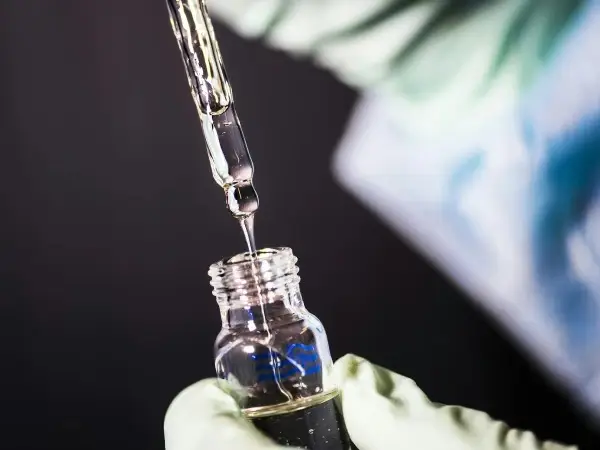
Choosing a research compound supplier is mostly an exercise in reading evidence. Every catalogue claims purity, every catalogue claims testing, and the language across the sector is close to interchangeable. What separates suppliers is whether those claims are attached to something checkable. Here is a practical framework for working that out.
What makes a research compound supplier reliable?
Reliability comes down to four things you can actually inspect: how the material is tested, what documentation travels with it, how it reaches you, and whether the supplier stays inside the research-use framework in how they describe their products. A supplier can be excellent on one and poor on the others, so it is worth grading each separately rather than forming a general impression.
How should you evaluate purity testing claims?
Start by asking what was measured and by whom. High-performance liquid chromatography establishes purity — how much of the sample is the target compound. Mass spectrometry establishes identity — whether it is the compound at all. A supplier quoting a purity figure with no identity confirmation has answered half the question.
Then ask when it was measured. Testing performed on the specific lot in your vial tells you something about your material. Testing performed on a production run from eighteen months ago tells you about a different batch that happened to share a product name. The distinction matters more than the headline percentage, and it is the single most common place where documentation quietly fails.
Every lot we supply is tested by an independent third-party laboratory, with identity and purity confirmed by HPLC. If you want the underlying methodology, the published literature on HPLC purity determination is a good starting point.
What documentation should a supplier provide?
At minimum, analysis that identifies the compound, states the purity, records the analytical method, and carries a lot number that matches the vial. Anything that cannot be tied back to the physical container in front of you is decoration.
Our guide to reading and verifying a peptide certificate of analysis goes section by section through what these documents contain, which fields are load-bearing, and how recycled or edited paperwork tends to give itself away.
Why does lot-level testing matter more than a general claim?
Because peptide synthesis is a batch process. Two runs of the same compound, from the same facility, using the same method, can differ in purity and in impurity profile. That is normal chemistry, not negligence — which is exactly why the analysis has to be per lot to mean anything.
A supplier who tests every lot is accepting an ongoing cost. A supplier who tests once and reuses the certificate is not. The difference is invisible on a product page and obvious on the paperwork.
How do you judge a supplier’s shipping and handling?
Ask how long the material will be in transit and what happens if something goes wrong. Lyophilized peptides tolerate shipping, but time in motion is time outside controlled storage, and a five-day journey through a national network involves handling nobody is recording.
Local delivery changes the arithmetic. Where we deliver by courier — San Francisco, Oakland, San Jose and the wider Bay Area — material ordered before 12:00 p.m. Pacific arrives the same business day. Outside that footprint, FedEx 2Day at a flat $19.99 is the fallback. Either way, you should be able to find out the answer before ordering rather than after.
What do ordering and payment terms tell you?
More than you might expect. Clear pricing per unit and per milligram, plainly stated delivery rates, and a checkout that does not obscure the total are all indicators of a supplier who expects repeat customers. Opaque pricing, pressure to pay by methods with no recourse, or fees that only appear at the last step are all indicators of the opposite.
Payment flexibility is a fair thing to want; payment methods that exist specifically to prevent you from disputing a bad order are not the same thing.
What does compliance posture reveal?
This is the most overlooked signal and often the most informative. Research compounds are supplied for laboratory research use only — not for human or animal consumption, not for diagnostic or therapeutic use. A supplier who understands that will not publish dosing tables, will not describe outcomes in people, and will not blur the line to make a sale. The FDA’s guidance on research-use-only labelling and distribution sets out what that framework actually requires.
A supplier who does publish that material has told you they will say whatever converts. It is reasonable to wonder what else they are willing to assert without evidence.
Red flags worth taking seriously
- Purity claims with no accompanying analysis. A number in marketing copy is not a measurement.
- Certificates with no lot number, or a lot number that does not match the vial.
- Dosing or human-use guidance anywhere on the site.
- No physical address or telephone number. Ours is 28 Geary St, Ste 650-1977, San Francisco, CA 94108, and (415) 236-2301.
- Pricing far below the market with no explanation of why.
- Vague answers to direct questions about testing, sourcing or transit.
Supplier evaluation FAQ
Is a higher purity percentage always better? Not on its own. A 99% figure from an unnamed laboratory on an unspecified batch is weaker evidence than a 98% figure from an independent laboratory on the lot you were sent.
Should I prefer a local supplier? If you are inside their delivery footprint, local sourcing reduces transit time and makes problems resolvable the same day. Outside it, the testing and documentation matter more than the postcode.
How many suppliers should I use? Enough not to be stranded if one has a supply gap, few enough that you know how each of them documents their material.
What if a supplier will not answer a testing question? Treat the non-answer as the answer.
For the next step, our beginner’s guide to research compounds covers formats, categories and storage, and the delivery guide covers what transit time does to handling risk.
Shop Research Peptides — Same-Day Bay Area Delivery
Browse our high-purity research peptides for laboratory and research use, with same-day & next-day San Francisco Bay Area delivery ($19.95–$24.95) and credit card, ACH, or local COD payment: BPC-157, GHK-Cu (Copper Peptide), Ipamorelin, Semax, Selank, CJC-1295 No DAC, PT-141 / Bremelanotide, Tirzepatide, Retatrutide, NAD+, and Research Diluent. All products are strictly for laboratory research use only — not for human or animal consumption.